RLHF and human feedback services for generative AI
Reinforcement Learning from Human Feedback (RLHF) services help UK AI and machine learning teams collect structured human preference rankings, rubric scores and response edits. These are for large language models (LLMs) and generative systems.
This service may suit your UK AI product, research or applied ML team needing human preference feedback for model alignment.
You need structured comparisons of model completions, multi-turn dialogues or retrieval-grounded answers without managing a day-to-day rater operation internally.
You have a documented scoring rubric and clear preference criteria.
You have an evaluation interface or structured dataset format and a named technical owner to resolve rubric edge cases.
The work we handle
Included work
Subject to requirements assessment and written scope agreement, the managed workflow can cover pairwise preference ranking, multi-dimension response scoring, supervised fine-tuning (SFT) response editing and policy-flagging tasks.
Model response preference ranking
Task: Compare candidate completions against your helpfulness, truthfulness, instruction and tone rules, then select the preferred response.
Output: A preference record captures ranks, winner or tie status and a rationale referencing the decisive criterion.
Multi-attribute response rubric scoring
Task: Evaluate individual responses against your defined scoring dimensions and supplied factual context.
Output: Your evaluation platform records dimension scores and defect tags identifying spans that failed constraints.
Response rewriting and reference drafting
Task: Edit flawed outputs or draft reference completions using your style guide, constraints and sources when both candidates fall below threshold.
Output: The revised target response follows your instructions and includes a note explaining the corrections.
Policy and refusal review
Task: Review sensitive responses against your written safety taxonomy for appropriate refusals, language and restricted content.
Output: Policy-compliance tags and an escalated case log identify prompts requiring human policy adjudication.
Clear responsibilities
Responsibilities and approvals
Every engagement uses a written agreement identifying the scope, exclusions, responsibilities, approval thresholds and escalation procedures.
Treba
Recruits, briefs and supervises the Kenya-based rater team and leads against your agreed eligibility profile.
Allocates prompt-response batches, manages daily queues and monitors adherence to your evaluation rubric.
Runs agreed rater calibration sessions, consensus checks and rationale reviews.
Compiles disagreement logs, escalates ambiguous rubric cases and delivers agreed progress and quality reports.
Your business
Provides prompts, model completions, source context, scoring rubrics and safety policy definitions.
Approves rater eligibility, calibration gold sets and revisions to scoring rules or refusal policies.
Names a technical or policy contact to adjudicate disputed rankings and borderline safety cases.
Retains ownership of reward modelling, training pipelines, model risk acceptance and deployment decisions.
For source-data labelling rather than model-response preference rating, compare hiring a Data Annotator. Your team directs the hire and defines the label taxonomy and review process.
We agree structured calibration so raters apply your rubric consistently.
Quality checks
Agreed reviews can check rater rationales against your scoring rubric, agreement on seeded calibration prompts and flagged safety exceptions requiring further review.
Reporting
Agreed reports can cover prompt volumes, preference distributions, rater disagreements, ambiguous rubric dimensions and open escalations awaiting guidance from your evaluation team.
Review and escalation
Consensus methods and review intervals are agreed during scoping. Your team resolves rubric ambiguity and retains final safety-policy and model-release approval.
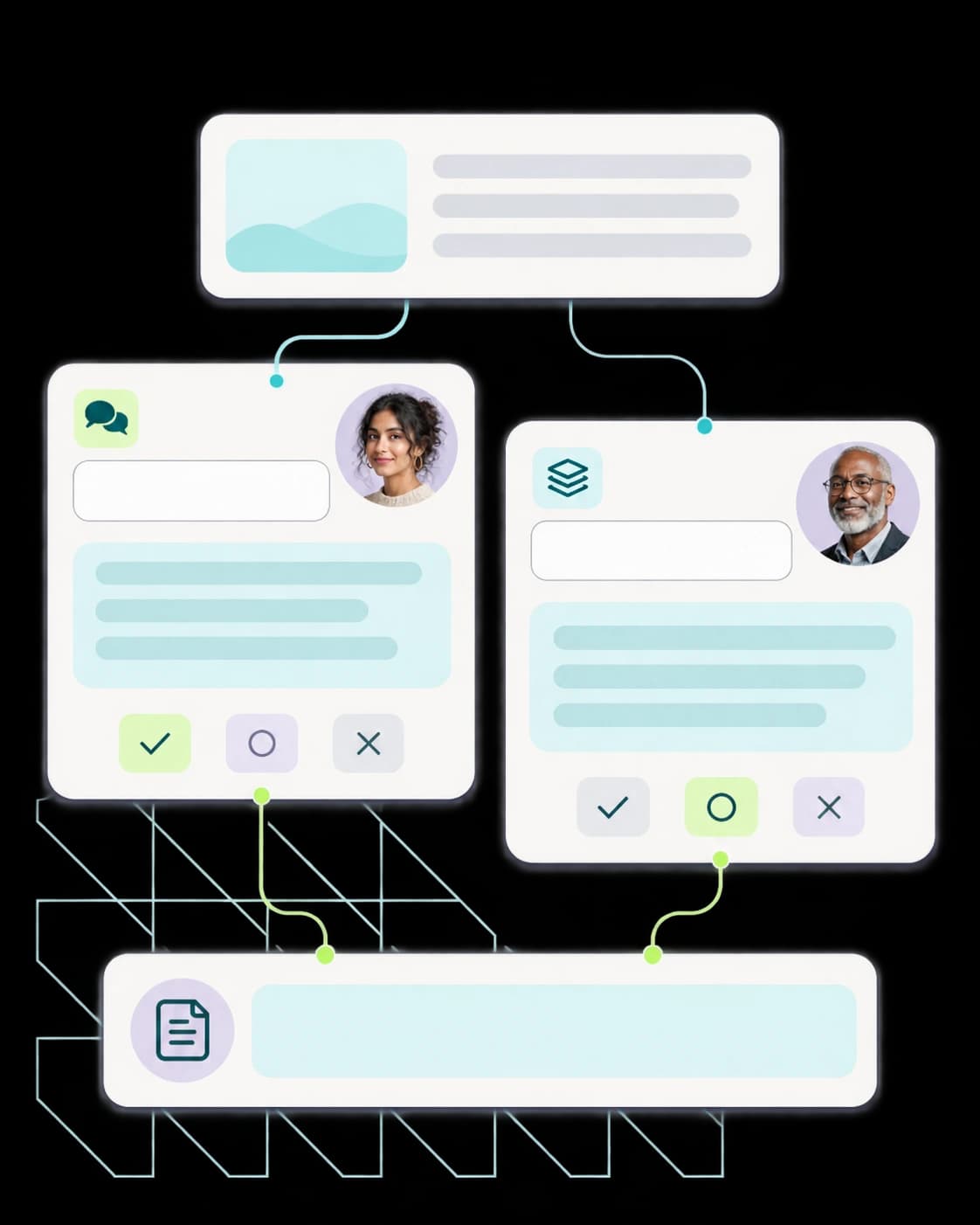
Supplied source passageCandidate answer ACandidate answer BRationale recorded
Working together
Systems, access and security
Systems in scope
Treba assesses evaluation interfaces, annotation workbenches or structured files to confirm access and recording for prompts, completions and scores. Named platforms or model workflows require assessment; pre-built integration is not implied.
Permissions and ownership
You own prompts, outputs, rubrics and feedback datasets. Both teams document role-based permissions, confidentiality, restrictions on copying prompts into external tools and access removal procedures.
Data handling and safeguards
For adversarial or distressing prompts, exposure limits and safeguards are assessed and agreed before work. Security controls are agreed per client. Treba holds Cyber Essentials and is registered with Kenya’s Office of the Data Protection Commissioner (ODPC).
Treba reviews rubrics and requirements before agreeing written RLHF scope. Launch timelines are agreed per client.
Rubric and task review
Share ranking, rubric-scoring or rewriting tasks, sample prompts, draft scoring instructions, required rater profiles and details of the workbench used for evaluation.
Written scope and proposal
Treba assesses rater availability and feasibility, then proposes included tasks, exclusions, calibration steps, consensus rules, reporting and fees in writing.
Calibration and onboarding
After signing, both teams configure workspace permissions, review gold-standard examples and run an agreed calibration batch to refine the rubric’s edge cases.
Evaluation and reviews
Treba supervises daily evaluation queues, audits rationale quality, escalates policy edge cases to your nominated lead and reviews progress at agreed intervals.
Fees and terms
Pricing and terms
Pricing comes through a scoped written quote. Pilot duration, notice periods and replacement terms are agreed per client.
Prompt length and complexity, multi-turn histories and source context documents.
Candidate responses compared, rubric dimensions and required written rewrites.
Rater background, calibration depth and multi-rater consensus passes per prompt.
Batch volumes, turnaround windows, workspace configuration and agreed security controls.
The proposal identifies included work, Treba’s fees and separately agreed charges. Material changes to rubric complexity, rater eligibility or evaluation volume require written agreement.
What types of human feedback tasks can be scoped?+
Depending on your requirements assessment, we can scope pairwise or multi-response preference ranking, multi-dimension rubric scoring, response rewriting for supervised fine-tuning and refusal or policy-compliance tagging. Each task type is anchored to your written instructions and examples.
Can you provide domain specialists for technical, legal or medical prompts?+
General comprehension, reasoning and instruction-following can be included in an assessment agreed for your rater brief. If your prompts require specific academic backgrounds or professional familiarity, specify that in your brief so we can assess candidate availability before quoting. Even when domain-familiar raters are agreed, formal legal, clinical, tax, regulatory or engineering sign-off stays with your business or your authorised professional.
How do you keep preference rankings consistent across raters?+
Consistency starts with a clear rubric and seeded calibration examples. Where agreed, we run pre-production calibration batches, assign overlapping prompts to multiple raters to surface disagreements, review written rationales and feed your team's adjudication notes back into the rater playbook.
Does Treba train the reward model or run fine-tuning pipelines?+
No. Treba delivers the human feedback, rankings, scores and edited completions inside your agreed environment. Your machine learning engineers retain ownership of reward model training, reinforcement learning loops, model weights and production deployment.
How is RLHF different from Model Testing & QA?+
RLHF focuses on generating human preference rankings, rubric scores and corrected completions to align and improve model behaviour. Model Testing & QA focuses on structured benchmark evaluation, regression testing and pre-release quality verification against defined test suites.
How does Managed Operations differ from hiring an RLHF Trainer?+
With Managed Operations, Treba manages the rater team, queue allocation, calibration checks and reporting. Under Hire Talent + EOR, your team selects the candidate, assigns daily work and supervises performance while Treba handles recruitment, vetting and agreed Kenyan employment administration.