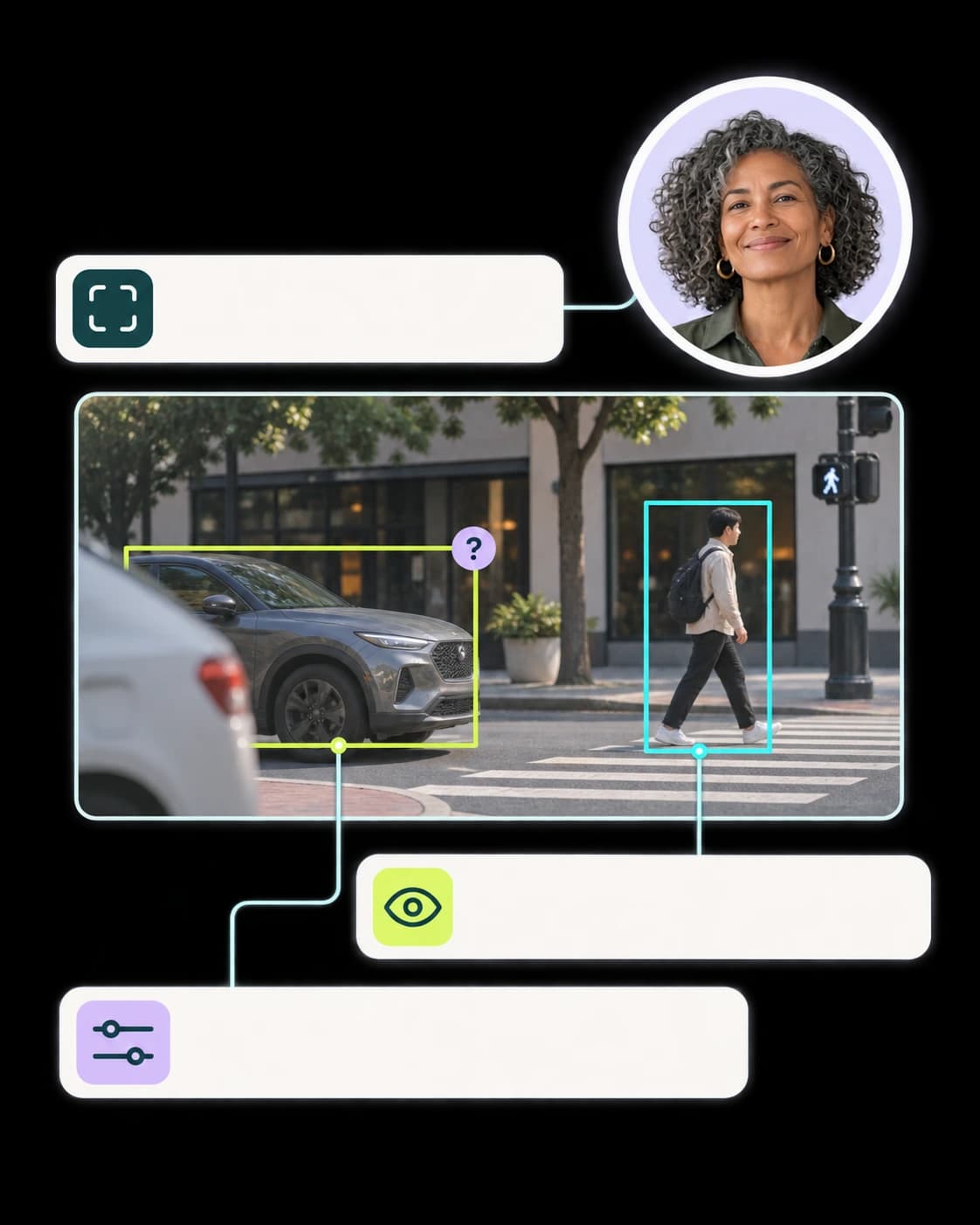
Label training, validation and evaluation datasets through a Kenya-based team managed by Treba. Your team defines the guidelines and approves the outputs.
This service may suit your UK product, computer vision or applied AI team seeking managed structured visual or multimodal dataset labelling.
You need consistent image, video, layout or multimodal labels without recruiting, scheduling and supervising an internal annotation queue.
You have a defined label ontology and written annotation instructions with edge-case examples.
You have an accessible annotation platform and a named technical owner to resolve schema questions.
The work we handle
Included work
Subject to requirements assessment and written scope agreement, the managed workflow can cover structured image, video, document or multimodal annotation according to your documented taxonomy and instructions.
Image and frame labelling
Task: Apply two-dimensional labels or keypoints to objects using your annotation platform and class definitions.
Output: Annotation records capture object classes, visibility or occlusion attributes and completion status per asset.
Video tracking and tagging
Task: Track objects across sequences, verify trajectories and tag timestamps and state transitions defined in your guideline.
Output: Time-indexed annotations record object identifiers, frame spans, state attributes and continuity exceptions.
Document region and attribute capture
Task: Tag structural regions in documents or image-text pairs and verify extracted field labels against visual context.
Output: Your schema holds layout annotations and verified tags, with illegible or non-standard items queued as exceptions.
Calibration and edge-case logging
Task: Review a defined sample against your rubric, correct straightforward formatting errors and document recurring taxonomy ambiguities.
Output: A reviewed batch summary and edge-case log identify assets, competing interpretations and schema decisions for your team.
Clear responsibilities
Responsibilities and approvals
Every engagement uses a written agreement identifying the scope, exclusions, responsibilities, approval thresholds and escalation procedures.
Treba
Recruits, briefs and supervises the Kenya-based annotation team and team leads assigned to your workflow.
Allocates dataset batches, tracks throughput during agreed working windows and manages routine queues.
Runs agreed calibration checks, peer reviews and quality sampling against your written labelling guidelines.
Logs ambiguous assets, tracks guideline clarifications and provides agreed progress and quality reporting.
Before production batches, we agree checks for annotation consistency and instructions.
Quality checks
Agreed sample reviews can compare annotations with gold-standard references, check bounding-box and attribute rules, and log inter-annotator disagreements for reviewer adjudication.
Reporting
Agreed reports can cover batch progress, item volumes by modality or class, quality findings, common errors and schema questions awaiting your decision.
Review and escalation
Sampling, review stages and acceptance criteria are agreed during scoping. Uncertain labels go to reviewers; your business retains final dataset sign-off.
Visibility thresholdVisible boundariesUncertain class
Working together
Systems, access and security
Systems in scope
Treba assesses annotation environments and data transfers for feasibility and permissions. Examples include Labelbox, Scale Studio, CVAT, V7 or internal labelling tools. Named tools require assessment; vendor partnership or pre-certified integration is not implied.
Permissions and ownership
You own source data, ontologies and exported annotations. For personal, sensitive or restricted datasets, role-based access, workspace restrictions and account revocation are documented before sharing data.
Data handling and safeguards
Redaction expectations for personal, sensitive or restricted datasets are documented before sharing. Security controls are agreed per client. Treba holds Cyber Essentials and is registered with Kenya’s Office of the Data Protection Commissioner (ODPC).
Treba reviews technical requirements before agreeing written annotation scope. Launch timelines are agreed per client.
Schema review
Share data modalities, label taxonomy, sample instructions, annotation platform, estimated volumes and any handling requirements for sensitive data within the proposed workflow.
Written scope and proposal
Treba assesses feasibility and prepares a written proposal covering included labelling tasks, exclusions, calibration steps, quality review rules, reporting and fees.
Calibration and onboarding
After signing, both teams configure platform permissions, escalation channels and gold-standard examples to prepare the agreed annotation workflow for production delivery.
Production and reviews
Treba manages daily batch allocation and internal quality checks, escalates edge cases to your nominated lead and reviews outputs at agreed intervals.
For any agreed pilot or calibration batch, size, duration and acceptance criteria are documented before launch.
Fees and terms
Pricing and terms
Pricing comes through a scoped written quote. Pilot duration, notice periods and replacement terms are agreed per client.
Data modality, asset complexity and objects or attributes per item.
Clarity and stability of taxonomy, instructions and edge-case rules.
Required multi-pass review, consensus scoring and agreed calibration workflows.
Batch volumes, working windows, platform setup and agreed security controls.
The proposal identifies included work, Treba’s fees and separately agreed charges. Material changes to taxonomy complexity, review stages or dataset volume require written agreement.
What data modalities can be scoped under this service?+
Depending on your requirements assessment and tooling, workflows can be scoped for image, video, document layout and multimodal datasets. If your project centres on text entity tagging or conversational preference ranking, we will guide you to our dedicated NLP & Text Labeling or RLHF services. This helps match the rubric and reviewer profile to the work.
Who defines the labelling guidelines and resolves edge cases?+
Your team defines the initial label ontology, annotation rules and gold-standard examples. During calibration and production, Treba's team flags ambiguous items that fall outside documented rules and routes them to your nominated data owner so you control every change to the schema.
Do we need our own annotation platform?+
Your existing cloud or self-hosted annotation tool is one possible working environment. Agree role-based accounts and permissions during scoping. During scoping, we assess your platform workflow, keyboard shortcuts, export formats and permission settings before agreeing the delivery plan.
How is annotation quality managed without inflating promises?+
We do not make blanket accuracy claims before seeing your data. We agree practical quality steps for your project, such as calibration batches, gold-set checks, peer review passes and structured disagreement logs. We report findings against your rubric at agreed intervals.
Can you handle datasets that contain personal or sensitive information?+
If your training data includes personal, confidential or restricted content, tell us during scoping before sending any files. We will assess the required access controls, workspace restrictions and data-handling rules so they can be agreed in writing alongside your legal and privacy team's review.
How does Managed Operations differ from hiring a Data Annotator?+
With Managed Operations, Treba manages the delivery team, batch allocation, quality checks and reporting. Under Hire Talent + EOR, your team selects the candidate, assigns daily work and supervises performance while Treba handles recruitment, vetting and agreed Kenyan employment administration.