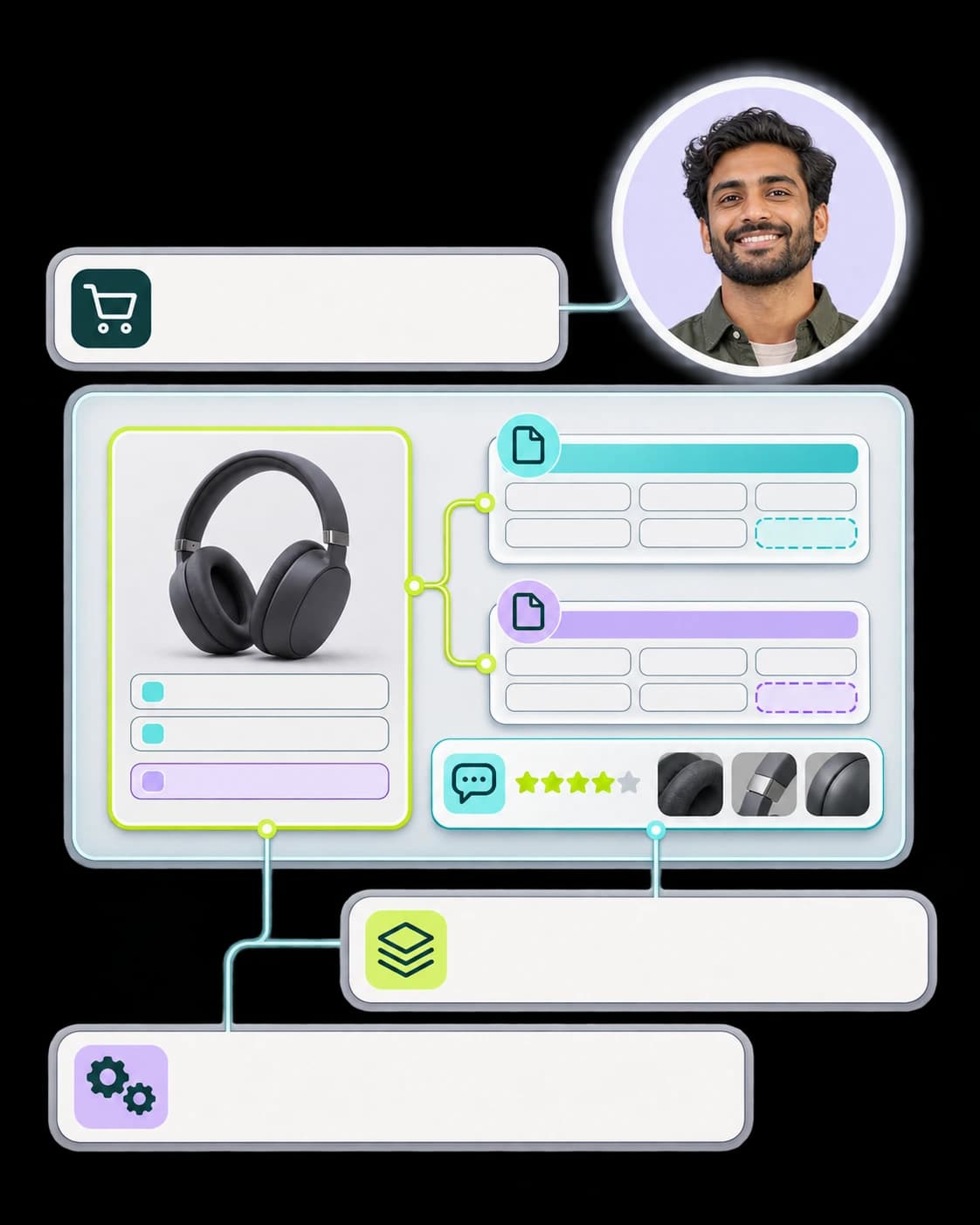
Ecommerce backend and catalogue operations serves UK online retailers and marketplace sellers. It gives them a structured way to keep product listings, stock keeping unit (SKU) attributes, collection pages and back-office store records accurate. This avoids pulling merchandising managers into repetitive data entry.
You run a UK ecommerce brand, multi-brand retailer or marketplace seller with recurring merchandising or operations backlogs.
You need supplier-sheet onboarding, variant-data normalisation across storefronts, marketplace feed fixes or back-office inventory sync checks.
You have documented category taxonomies, structured supplier or product inputs and defined store permissions.
Your named merchandising or operations contact can approve exceptions and live releases.
The work we handle
Included work
Subject to requirements assessment and written scope agreement, the managed workflow can cover product listing creation, stock keeping unit (SKU) attribute normalisation, marketplace feed updates and back-office store administration.
Stage product listing data
Task: Convert approved supplier data, copy and images into structured product listings or bulk imports in your ecommerce or PIM system.
Output: Staged pages or validated imports await your merchandising lead’s review and publication sign-off.
Check catalogue data quality
Task: Audit SKU records against your schema, identify missing or inconsistent data and apply approved corrections.
Output: Cleaned records include an exception log for SKUs needing buyer or supplier clarification.
Administer marketplace product feeds
Task: Map attributes, review listing errors and prepare corrected feed submissions within your permitted account access.
Output: Updated feed files include a resolution summary and policy flags escalated to your team.
Check collections and sync exceptions
Task: Group approved SKUs into collections, check staging filters and review inventory or order-sync errors under your escalation rules.
Output: Pre-launch checklists and exception reports route sync anomalies and stock mismatches to your operations owner.
Catalogue and order-system records can feed a finance handoff, but ledger work needs a separate scope. Explore Accounting & Bookkeeping for a Treba-managed finance workflow, with accounting policy, payments and final approval retained by your finance team.
Clear responsibilities
Responsibilities and approvals
Every engagement uses a written agreement identifying the scope, exclusions, responsibilities, approval thresholds and escalation procedures.
Treba
Recruits, trains and supervises the Kenya-based ecommerce backend team assigned to your store workflow.
Allocates SKU onboarding batches, catalogue audits and feed updates across the agreed schedule.
Checks staged listings and attribute updates against the taxonomy and formatting rules you document.
Tracks data exceptions, manages routine workflow issues and provides agreed progress reporting.
Your business
Supplies supplier data sheets, taxonomy schemas, brand style guides, image assets and required system access.
Approves retail pricing, promotional discounts, product compliance statements and releases to the live storefront.
Retains control of payment settings, financial transactions, warehouse fulfilment and contracts with your suppliers.
Names an escalation contact to resolve missing supplier data and store issues outside agreed scope.
Agree listing and store-administration checks before delivery begins.
Quality checks
Agreed checks can sample staged products and feeds for mandatory SKU attributes, variant mappings, image specifications and category tags against your taxonomy.
Reporting
Agreed reporting can cover staged or updated SKUs, resolved feed errors, items awaiting supplier or buyer input, and quality check findings.
Review and escalation
Agree review cadence and service measures during scoping. Missing costs or retail prices go to your buyer for sign-off before publication.
Supplier size conventionsUK store size schemaMissing barcode fields
Working together
Systems, access and security
Systems in scope
Treba assesses ecommerce, PIM, marketplace and spreadsheet tasks and permissions, including Shopify, WooCommerce, Magento, BigCommerce or Amazon Seller Central. Mentioning a platform identifies a requirement to assess, without implying automatic vendor integration.
Permissions and ownership
Your business owns its storefront accounts, product databases and digital assets. Agree role-based permissions, including staging-only catalogue roles and restricted payment-gateway or customer-PII visibility, with documented access-review and revocation procedures.
Data handling and safeguards
Security controls are agreed per client based on their requirements and working arrangements. Treba holds Cyber Essentials and is registered with Kenya’s Office of the Data Protection Commissioner (ODPC).
Start with a requirements review and written scope agreement. Launch timelines are agreed per client.
Requirements review
Share commerce platforms, SKU volumes, attribute schemas, marketplace feeds, current bottlenecks and approval rules for the ecommerce backend requirements review.
Written scope and proposal
Treba assesses feasibility and proposes included catalogue and store-admin tasks, exclusions, coverage hours, approval gates, reporting and fees in writing.
Staging setup
After signing, both teams configure platform permissions, taxonomy playbooks, staging checklists and escalation contacts for the catalogue and store-administration workflow.
Delivery and reviews
Treba runs daily catalogue and store administration, flags data exceptions to your nominated contact and reviews progress with your team at agreed intervals.
Where a pilot is appropriate, its scope, duration and review criteria are agreed upfront.
Fees and terms
Pricing and terms
Your scoped written quote reflects these drivers. Pilot duration, notice periods and replacement terms are agreed per client.
SKU onboarding/update volumes, seasonal range launches and catalogue migrations.
Attribute schemas, variant structures and multi-marketplace feed-formatting complexity.
Coverage windows, turnaround expectations and staging review steps.
Platform access, onboarding preparation and agreed reporting requirements.
The proposal specifies inclusions, Treba’s fees and separately agreed charges. Changes to SKU volumes, platform scope or coverage hours require written agreement.
How does Ecommerce Backend Ops differ from Ecommerce Order Ops?+
Ecommerce Backend Ops covers non-customer-facing store administration—such as product listing staging, SKU attribute normalisation, collection updates and marketplace feeds. Ecommerce Order Ops covers customer-facing order enquiries, delivery tracking follow-up and returns administration.
Can the team publish new products or price changes directly to our live store?+
By default, we recommend a staged workflow where our team prepares and checks listings in draft or staging and your merchandising lead approves live publication and pricing. Where your business explicitly authorises direct publishing for routine attribute updates, those rules and permission limits are documented in writing.
Does this service include payment processing, refunds or theme coding?+
No. Payment gateway configuration, financial disbursements, refund approvals and custom software or theme coding sit outside this catalogue and back-office administration scope.
Can Treba work inside our existing Shopify, Magento, WooCommerce or PIM setup?+
We assess your ecommerce platform, PIM and marketplace tools during scoping. Your written proposal confirms the systems covered and the role-based permissions needed before onboarding starts.
How do you handle seasonal product launches with large supplier spreadsheets?+
Share your seasonal launch calendar and typical SKU volumes during scoping so we can assess capacity, batch staging schedules and QA checkpoints in advance.
How does Managed Operations differ from hiring an Ecommerce Listing Manager?+
With Managed Operations, Treba manages the delivery team, batch allocation, quality checks and reporting. Under Hire Talent + EOR, your team selects the candidate, assigns daily tasks and supervises performance while Treba handles recruitment, vetting and agreed Kenyan employment administration.